
Some ‘NOs’ are like avocados - they’ll ripen if you’re patient.
Mar 09, 2026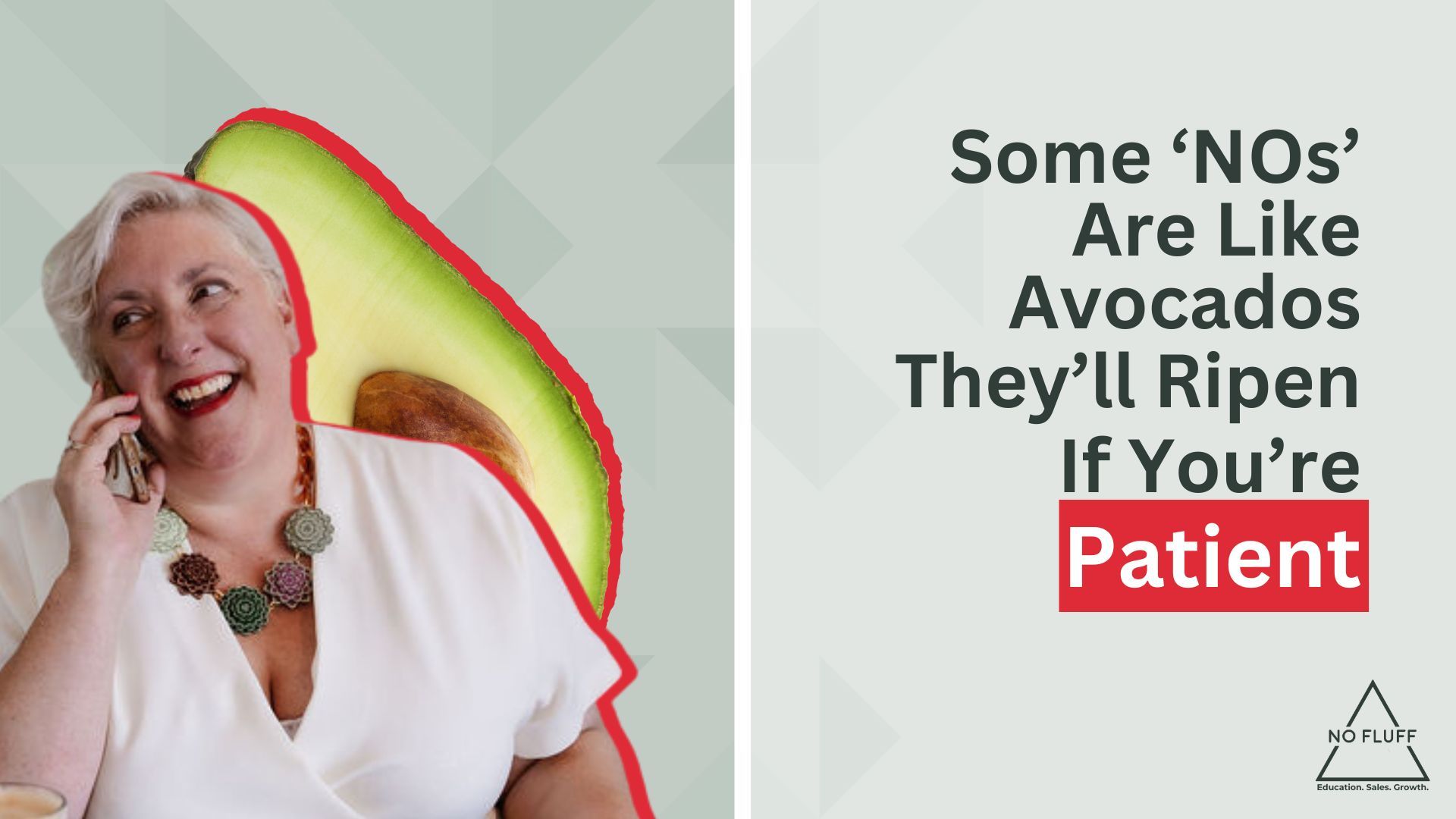
How You Handle a “No” Could Decide Your Next “Yes”
Not every enquiry will turn into a client - I’m good but I don’t convert at 100%. So we get on with it.
But how you respond to that “no” can directly influence whether the door stays open or quietly closes for good.
You may be missing opportunities - so read on.
When Silence Speaks Volumes
Recently, I spoke to a potential speaker for No Fluff Fest. These conversations aren’t just about whether someone is a good presenter, I want to make sure they truly understand the world of selling education - the care, nuance, and ethics it requires - and that their personality, content and skills complement the rest of the line-up I’ve already booked.
It’s a bit like hiring: you’re not just looking for talent, you’re looking for the right mix to fit your team and their skill sets.
This time, when I was arranging the sessions, I found that someone else was a better fit. I thanked this speaker by email and voicenote, explained why, and said I’d love to keep in touch for the next No Fluff Fest.
What came back?
Nothing.
No “thanks for considering me.” No “I understand.” Not even a 👍.
I felt like I’d offended him, though I’d been super polite and transparent, and as I hate to offend anyone, I followed up a week later to reiterate my appreciation for his time. Still nothing.
That silence was an answer in itself. Not rude. Not angry. But it left the sense that I’d upset him. and it’s unlikely I’ll reach out again. I would be starting the conversation on a negative vibe. It also shows me that he’s not skilled at follow-up or rejection and when we’re talking sales trainers and speakers.. he should be (in my opinion), and I want people that are great in this field to be training my delegates.
When “No” Becomes “Not Yet”
Now, here’s a different example.
Last year, I met with an agent about my Agency Accelerator Programme. He decided it wasn’t the right time. Fine - I was disappointed but, again, nobody wins every time. But I didn’t let that be the end of the conversation. Mainly because I’m fully invested in helping our sector as much as possible, but particularly because I knew I could add huge impact to his agency and was chomping at the bit!
I sent him a few resources based on our discussion, things I genuinely thought might help him in the meantime, a few checklists, a previous webinar I’d given and a blog I’d read that I thought he’d be interested in; and told him I’d be here if he ever changed his mind. If I came across something relevant, I sent it his way. Sometimes that was my own content, sometimes it was an article, webinar, or tool from someone else.
I also thought about who else might be able to help him now. If I know I’m not the right fit at this moment, I’ll often introduce people to others who are - it builds goodwill and trust and just helps everyone out. Others do it to me too - so it’s ‘karma’!
He gets my newsletters, I’d occasionally send him a DM or comment on his posts. Nothing heavy or time-consuming.
Fast forward to last week: he messaged me out of the blue* to say he’s ready to start the Agency Accelerator next month.
If I’d gone quiet after that first “no,” I doubt either of these things would be true:
- I’d still be on his radar.
- He’d be excited to work with me now.
Why Your “No” Response Matters
There’s a horrible old sales saying: “buy or die.”
It means you stop talking to someone the minute they say no or aren’t ready or able to purchase.
It’s outdated thinking.
If they’re still a viable lead - meaning they could buy from you at some point and you could genuinely help them, then you keep nurturing them. You keep the connection alive. It’s low-touch follow-up. I build frameworks for this all the time.
And even if they’re no longer a fit, lets say it’s a parent whose children are now too old for your services, please don’t slam the door. People have networks. They have friends, colleagues, and relatives who might be your next client. A gracious “no”, a bit of easy nurture, can turn into a great referral.
A Simple Framework for Handling a “No”
- Acknowledge the decision
Thank them for their time and for considering your offer. - Leave the door open
Make it clear you’d be happy to reconnect in future, no guilt-tripping. - Add value without strings
Share a resource, tip, or introduction (yours or someone else’s) that relates to their situation. - Signpost to other help
If you’re not the right fit right now, suggest others who might be. It shows integrity and keeps you in their good books. - Stay lightly in touch
This could be through newsletters, occasional messages, or engaging with their content. - Make the return or referral easy
When the time is right, they should know exactly how to get back in touch. And when they think of someone who might be a fit - they’ll refer you.
Final Thought
Rejection handled well plants seeds for future opportunities.
Rejection handled badly… grows only a sour feeling.
When someone says “no” to you the real question is: what will they remember about you afterwards?
If you’d like to have No Fluff work on your nurture flows - just get in touch - hello@nofluff.biz
If you're interested in having a chat to find out how I can help you increase sales or to just get to know each other, then please book in a call!
